
A Public Art Project Shows You the Colors You Should Be Eating - Food - GOOD

Architecture and war are not incompatible. Architecture is war. War is architecture. I am at war with my time, with history, with all authority that resides in fixed and frightened forms. I am one of millions who do not fit in, who have no home, no family, no doctrine, no firm place to call my own, no known beginning or end, no "sacred and primordial site." I declare war on all icons and finalities, on all histories that would chain me with my own falseness, my own pitiful fears. I know only moments, and lifetimes that are as moments, and forms that appear with infinite strength, then "melt into air." I am an architect, a constructor of worlds, a sensualist who worships the flesh, the melody, a silhouette against the darkening sky. I cannot know your name. Nor you can know mine. Tomorrow, we begin together the construction of a city.



Like the spaceships in Stanley Kubrick's film 2001, the walls of their representational frame simply turn and turn, bringing us over and over again back through the same space, as if unwilling to let go of what's come before...retired into this deliberately over-nostalgic world of their own making, constantly cycling back in memory through their shared past. They have built a frame to fit themselves within, as if to give their lives narrative completion.



These, at least, seem to be among the ambitions driving The Believer and n+1. Their editors are young, and their circulations are not large. (It may, indeed, be hard to find these publications outside of independent bookstores in larger cities and college towns.) The names of the writers who contribute to them are, for the most part, not well known: first- or second-time novelists, graduate students and moonlighting academic mavericks, with an occasional celebrity professor or foreign writer thrown in for good measure. Modest though the magazines are in scale and appearance, there is nonetheless something stirringly immodest - something "authentic and delirious," as e.e. cummings once wrote - about what they are trying to do, which is to organize a generational struggle against laziness and cynicism, to raise once again the banners of creative enthusiasm and intellectual engagement.


The notion of domesticity itself an invention of the modern age—the home, the family, privacy as comfort as opposed to the workplace—has been challenged and ridiculed by modern artists, architects and designers. From 1859, when Charles Baudelaire’s The Painter of Modern Life casts the modern painter as a man of the crowd who curses the hours he must spend indoors asleep when he could be out recording ‘the landscapes of the great city,’ domesticity became the anti-thesis to modernity.




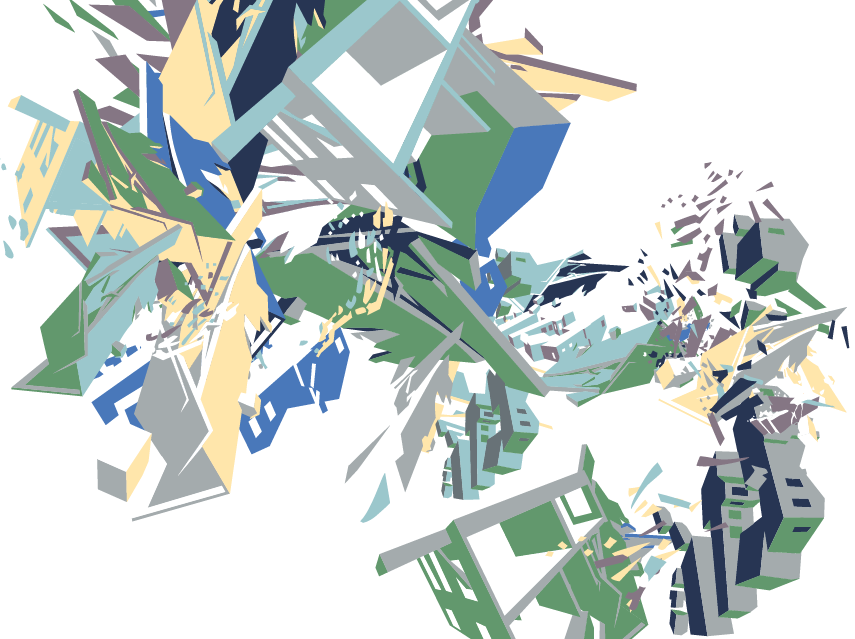


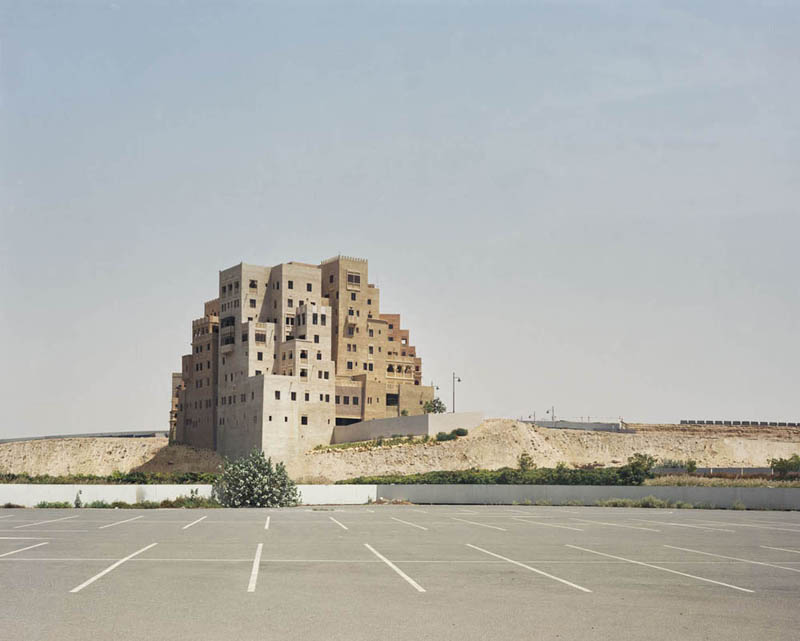
Although it is the result of extensive travels and research in five cities of the Middle East and Turkey—Istanbul, Beirut, Amman, Cairo and Dubai—it could just as easily pass as the pictorial record of a dérive through a single, imaginary city: a city without a center, populated by extraordinary and at times implausible architectural artefacts; an urban laboratory whose physical traits are defined by migratory flows, spatial transformation and geopolitical flux on a continental scale.

In other words, forget academic rigor. Never take the appropriate next step. Talk about Chinese urban design, the European space program, the landscape in the films of Alfred Hitchcock in the span of three sentences -- because it's fun, and the juxtapositions might take you somewhere. Most importantly, follow your lines of interest.

- A lot of attention—in Chicago, at least—has been given to the fact that Aqua is the tallest building in the world designed by a woman. That’s nice for Gang, but beside the point, and dwelling on it leads too easily to predictable interpretations of skyscrapers as symbols of male identity...
- balconies on every floor, all the way up. Usually, condominiums sixty or seventy floors above the street don’t have balconies, because it’s just too windy up there to go outside...
- you might think it’s a gigantic version of one of those “blob” buildings of the past few year
- In an age in which so much architectural form—even, sometimes, the best architectural form—has no real rationale beyond the fact that it is what the architect felt like doing, there is something admirable about the tower’s lack of arbitrariness. It reclaims the notion that thrilling and beautiful form can still emerge out of the realm of the practical.


