
Der Traum vom Fliegen - The Art of Flying
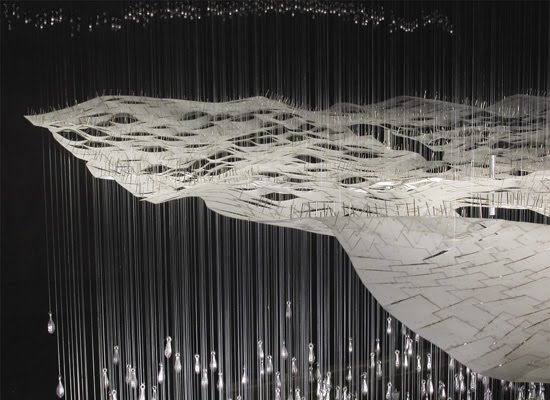
4 March–8 May 2011
Opening:
3 March, 7 p.m
Haus der Kulturen der Welt
John-Foster-Dulles-Allee 10
10557 Berlin, Germany


Like the spaceships in Stanley Kubrick's film 2001, the walls of their representational frame simply turn and turn, bringing us over and over again back through the same space, as if unwilling to let go of what's come before...retired into this deliberately over-nostalgic world of their own making, constantly cycling back in memory through their shared past. They have built a frame to fit themselves within, as if to give their lives narrative completion.




These, at least, seem to be among the ambitions driving The Believer and n+1. Their editors are young, and their circulations are not large. (It may, indeed, be hard to find these publications outside of independent bookstores in larger cities and college towns.) The names of the writers who contribute to them are, for the most part, not well known: first- or second-time novelists, graduate students and moonlighting academic mavericks, with an occasional celebrity professor or foreign writer thrown in for good measure. Modest though the magazines are in scale and appearance, there is nonetheless something stirringly immodest - something "authentic and delirious," as e.e. cummings once wrote - about what they are trying to do, which is to organize a generational struggle against laziness and cynicism, to raise once again the banners of creative enthusiasm and intellectual engagement.


The notion of domesticity itself an invention of the modern age—the home, the family, privacy as comfort as opposed to the workplace—has been challenged and ridiculed by modern artists, architects and designers. From 1859, when Charles Baudelaire’s The Painter of Modern Life casts the modern painter as a man of the crowd who curses the hours he must spend indoors asleep when he could be out recording ‘the landscapes of the great city,’ domesticity became the anti-thesis to modernity.


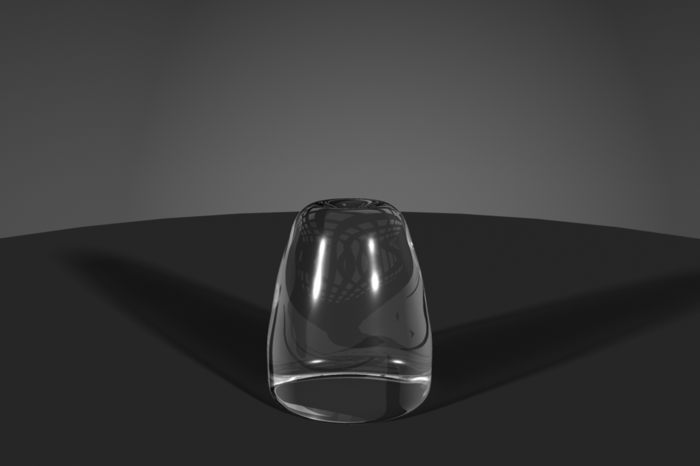


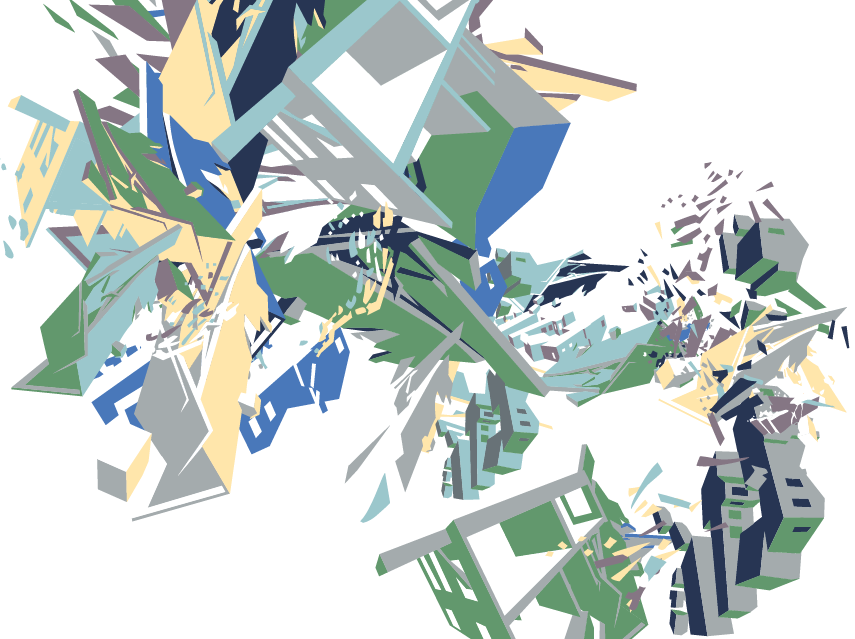


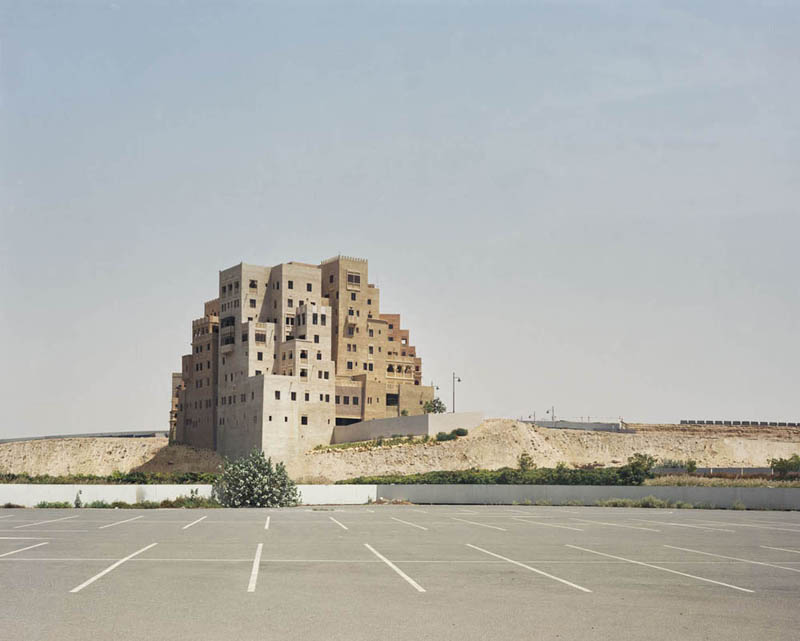
Although it is the result of extensive travels and research in five cities of the Middle East and Turkey—Istanbul, Beirut, Amman, Cairo and Dubai—it could just as easily pass as the pictorial record of a dérive through a single, imaginary city: a city without a center, populated by extraordinary and at times implausible architectural artefacts; an urban laboratory whose physical traits are defined by migratory flows, spatial transformation and geopolitical flux on a continental scale.

In other words, forget academic rigor. Never take the appropriate next step. Talk about Chinese urban design, the European space program, the landscape in the films of Alfred Hitchcock in the span of three sentences -- because it's fun, and the juxtapositions might take you somewhere. Most importantly, follow your lines of interest.

- A lot of attention—in Chicago, at least—has been given to the fact that Aqua is the tallest building in the world designed by a woman. That’s nice for Gang, but beside the point, and dwelling on it leads too easily to predictable interpretations of skyscrapers as symbols of male identity...
- balconies on every floor, all the way up. Usually, condominiums sixty or seventy floors above the street don’t have balconies, because it’s just too windy up there to go outside...
- you might think it’s a gigantic version of one of those “blob” buildings of the past few year
- In an age in which so much architectural form—even, sometimes, the best architectural form—has no real rationale beyond the fact that it is what the architect felt like doing, there is something admirable about the tower’s lack of arbitrariness. It reclaims the notion that thrilling and beautiful form can still emerge out of the realm of the practical.

Once again, as in so many of Bellmer’s photographs, this body is riven by inner conflict...both trapped and out of control in the claustrophobic space. And once again, this headless hybrid creature (like octopus and a human combined) suggests the condition of hysteria. By portraying the doll as headless and flailing, Bellmer seems to collude with class nineteenth-century stereotypes of hysterics as woman who have lost their minds, who are emotional and animal-like in nature, and who are literally out of control.
Although the interpretations of hysteria and many of its symptoms have changed in various ways from Greek times to the present, and it has affected both men and women, hysteria has been consistently characterized as a female malady. What we call hysteria today is a psychosexual abnormality that manifests itself through an assortment of physical symptoms. The word hysteria derives from the Greek hyster (womb) and was used in ancient Greece to designate a pathology presumed to result from a displaced or “wandering” womb. The Greeks believed that in cases involving an insufficient amount of sexual intercourse or even sexual abstinence, the womb would become uprooted and wanter around the woman’s body, producing negative behavioral side effects. Women who did not conform to the conventional roles assigned in patriarchal culture—namely, wife and fertile mother—were pathologized...
In most Western cultures in the nineteenth century...according to diagnostic science of the period, the female hysteria registered her symptoms across her body through a nonverbal language f gestures that expressed her unconscious anger and rebellion. These passionate physical tremors, like the pent-up energy of an earthquake rocked her otherwise contained and controlled body.
Such antisocial characteristics were first “documented” in photographs taken under the direction of the famous French psychologist Jean-Martin Charcot at the Salpetriere clinic between 1875 and 1880...hysterical fits were induced by electrical shock, loud noises, pressure on the ovaries, the use of ether, tying women down, or placing their heads in a brace in order to hold a pose for the long exposure time. The cultural historian Sigrid Schade points out that it is not a coincidence that many nineteenth-century hysterical poses resembled epileptic fits, because after 1870 Charcot place epileptic patients and hysterics in the same ward. Many gestures, especially the “hysterical” arched back, resembled depictions of women possessed by demons or images of exorcism found in earlier medieval and Renaissance paintings. Charcot, who was married to a wealthy widow and wa sa patron of the arts, closely connected to Parisian art circles, collected these works and hung them on the walls of the Salpetriere clinic, where patients had visual access to them.

Gender is not something that I manufacture from a historical or theoretical perspective. It's actually something that surprises me in the work. It doesn't come from some sort of pre-conceived notion. It's is only the unconscious imagination that would wake up to find their mother dressed up as their father and vice versa. It’s only from this place that I can imagine doing the laborious task of mopping the floor with my hair or making lipstick out of six hundred pounds of chewed chocolate. It's sort of this confusion...this misunderstanding that I find illuminating... I'm not talking about a kind of non-thinking or idiot savant attitude, but I'm talking about...the unconscious as a kind of a product of the conscious mind...and the conscious mind that's done a lot of work on this issue that is very aware of the way that I'm treated in the world as a woman. A conscious mind that sort of watches how gender plays itself out in the world. It's my belief that in liberating the imagination is the only way that I can envision some other possibility.


