Sunday, March 27, 2011

Housing in Berlin


Dessau | Kalle Koponen Photography

I'm working on a Berlin extension of my Sherwin Series. Being apartment-bound more than I'd like with a fussy baby, I'm thinking a lot about this city—its layers of history, the impact of 20th century housing policy, the psychological implications of these shifts, a resurgence of nationalism and anti-immigration stances, my ethnically diverse neighborhood Kreuzberg and its dense sea of early 20th century architecture covered in graffiti. This graffiti becomes a texture: it is mostly immature tags and a quarter in English.

My husband forwarded me the photo series of how urban areas continue to change 20 years after reunification. One picture and a link to the series included above. He sent me this link after we were discussing The File: A Personal History by Timothy Garton Ash. After interviewing countless former Stasi, Timothy Garton Ash considers how the Stasi provided father figures for men who lost their fathers in WWII. With the policies of the Stasi well known by all people our age who grew up in Berlin, I'm also thinking about these layers of this city.

Tuesday, March 15, 2011

Thoreau, Castles in the Air

If you have built castles in the air,
your work need not be lost;
that is where they should be.
Now put the foundations under them
—Henry David Thoreau, Walden

Friday, March 11, 2011

Lebbeus Woods

Leave it to bldgblog to always take me where I need to go.

As I'm wandering around Berlin, taking photos of architecture to take The Sherwin Series to the next stage, I learn about Lebbeus Wood's film treatment for Underground Berlin. Then I stumble on this quote from Woods which is exactly aligned with the behavior of the forms in my 2010 prints.

Architecture and war are not incompatible. Architecture is war. War is architecture. I am at war with my time, with history, with all authority that resides in fixed and frightened forms. I am one of millions who do not fit in, who have no home, no family, no doctrine, no firm place to call my own, no known beginning or end, no "sacred and primordial site." I declare war on all icons and finalities, on all histories that would chain me with my own falseness, my own pitiful fears. I know only moments, and lifetimes that are as moments, and forms that appear with infinite strength, then "melt into air." I am an architect, a constructor of worlds, a sensualist who worships the flesh, the melody, a silhouette against the darkening sky. I cannot know your name. Nor you can know mine. Tomorrow, we begin together the construction of a city.

Wednesday, March 09, 2011

Boycotting Swiss Air

I normally don't make posts like this, but I feel the need to vent and help others avoid dealing with Swiss Air.

My husband Owen and I are in Berlin this academic year, funded by the DAAD. More about their programs here in case you are interested. http://daad.org/?p=gradstudy_arts

To make this adventure happen, last April we booked Swiss Air flights to Berlin on July 31, 2010, returning April 15, 2011 (because you can book further into the future), and it cost $1000 per person. They told us to call back after the new year to change the return flight home and that because of our circumstance, they would put a note in our file saying we could change once without a re-booking fee. We were told to pick a date when we thought we would come back. Our understanding was that this date was approximate and flexible so we picked July 30. They also said that we could add an infant ticket when we change the return ticket, and it would cost 10% of a normal ticket (also confirmed on the site: http://www.swiss.com/web/EN/services/before_flight/children/Pages/infants.aspx)

This past Monday, we called to change the return, knowing that there would be a fee difference. Researching in advance, we learned that July 26 was cheaper, so we asked for that date, but learned that we would have to pay $250 per person in rebooking fees. What more? To have our child sit on our lap, we would need to pay $600 for an infant ticket (they say a one-way ticket in summer is $4000, 10% is $400 plus refueling and other fees). So we had to stick with July 30, pay the difference in price ($225 more per person) + the $600 for daughter who will 8 months when we fly. That's $1050 more! I'm never flying Swiss Air again. In the future, I'm taking even more meticulous notes and will insist on something in writing. Bastards.

Monday, February 21, 2011

Der Traum vom Fliegen - The Art of Flying


Der Traum vom Fliegen - The Art of Flying

4 March–8 May 2011

Opening:
3 March, 7 p.m

Haus der Kulturen der Welt
John-Foster-Dulles-Allee 10
10557 Berlin, Germany

Saturday, February 12, 2011

Hal Foster, American Academy of Berlin


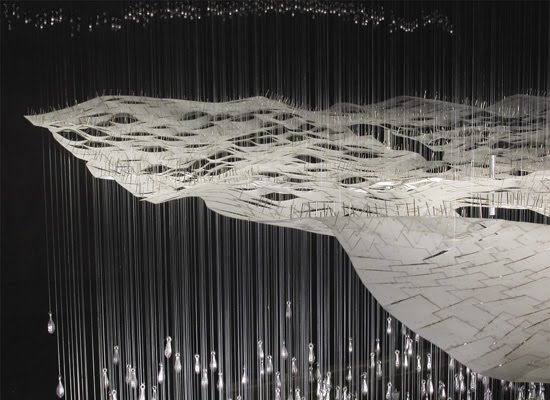
Wave Garden Yusuke Obuchi, 2002 (in Hal Foster's 2004 lecture at UNC Charlotte, http://vimeo.com/13465894)

Two nights ago I saw Hal Foster speak at the American Academy of Berlin. Ah to have a professor like him as an 18 year old. How lucky that would have been. His American Academy project is called Strategies of Survival 20th-Century Art, and last Thursday talk, How to Survive Civilization or What I Have Learned from Dada.

Wednesday, February 09, 2011

After Death, Protecting Your 'Digital Afterlife' : NPR

After Death, Protecting Your 'Digital Afterlife' : NPR

I'm an incessant notekeeper + journal writer. Moving so many times leaves me with memories from too many places that shuffle and overlap, sometimes morphing into inaccurate images and half truths. My notes are my feeble attempts to get it all down to reference later. As organized as I am, I rarely revisit my journals, my delicious bookmarks, etc but I still do it, comforted by the idea that should I need them, I can dig up details. For these reasons, I found this Fresh interview about the digital afterlife fascinating. Enjoy.

Made me think of Danica Phelps contour line drawings with notes on her daily activities. The only ones I could find online separated the notetaking from the images, but when they are hung in the gallery together, you make the connection. A few images here.


Friday, December 17, 2010

Slate Article, MFA vs NYC

My friend Elisabeth Condon recommended this Slate article about the MFA in Creative Writing, found online at http://www.slate.com/id/2275733/. Excellent food for thought regarding MFA programs in the Visual Arts.

Passages I highlighted with a few thoughts below...


- analysis would be to lay to rest the perpetual handwringing about what MFA programs do to writers (e.g., turn them into cringing, cautious, post-Carverite automatons)


- ...even if the writer has somehow never heard of an MFA program...if she's read any American fiction of the past 60 years, or met someone who did, she's imbibed the general idea and aesthetic. We are all MFAs now

- programs...so lax and laissez-faire as to have a shockingly small impact on students' work


- ingenious partial solution to an eminent American problem: how to extend our already protracted adolescence past 22 and toward 30, in order to cope with an oversupplied labor market

- what percentage of the total income of American fiction writers comes from the university, and what percentage from publishing contracts—but it's safe to say that the university now rivals, if it hasn't surpassed...


- the diffuse network of provincial college towns

- each affords its members certain aesthetic and personal freedoms
while restricting others; each exerts its own subtle but powerful pressures on the work being produced


Regarding the article’s short story vs novel debate, perhaps it's ok to let the system evolve as it will. I do, however, have a problem when the explosion of MFA programs cultivates artwork that is didactic and too burdened with theory. If the MFA programs could support their faculty, giving them ample time off for studio production that seeks breakthroughs with formal-conceptual synergy, the quality of artwork in our country would be improved. Germany, with a strong safety net of basic social service and belief in the value of cultural production, is an excellent role model.

Sunday, November 21, 2010

Owen Mundy

Owen Mundy

Our house is blocked on google view! Fascinating history on privacy in Germany. Details at Deutsche Welle: http://www.dw-world.de/dw/article/0,,6151344,00.html

Monday, October 25, 2010

Rip Hopkins - Another Country


Rip Hopkins - Photography : Another Country

Expat interiors. Constant quest for something better.

Left Behind - Slide Show - NYTimes.com


Left Behind - Slide Show - NYTimes.com

Since desire for the right home (expat quest) in these tough economic times translates to the desire for any home at all, my research in foreclosed homes continues. Excellent related article about the US Housing crisis: http://opinionator.blogs.nytimes.com/2010/10/12/picturing-the-crisis/

Image above by Ellen Brownlee

BLDGBLOG: The Migration of Mel and Judith


BLDGBLOG: The Migration of Mel and Judith

Looks my tangled home fragments in a lamp. Brilliant.

Excerpt from bldgblog.blogspot.com. Always a good read:

Like the spaceships in Stanley Kubrick's film 2001, the walls of their representational frame simply turn and turn, bringing us over and over again back through the same space, as if unwilling to let go of what's come before...retired into this deliberately over-nostalgic world of their own making, constantly cycling back in memory through their shared past. They have built a frame to fit themselves within, as if to give their lives narrative completion.

Sometimes nest-building feels like this. It's fascinating to me when expats do this, even in temporary homes as Bachelard described the home—the I that separates from the non-I.

For this reason, I'm currently collecting photos of expat domestic spaces. If you have a moment, please email a photo of any part of your home overseas, particularly an interior room, to jdietrick@gmail.com Thanks!

Sunday, October 24, 2010

Exhibition Next Month at CSU


FOR IMMEDIATE RELEASE

For more information, contact:
Joelle Dietrick
Reichenberger Straße 149
10999 Berlin
Germany
home: +49(30) 70221305
cell: +49 (174) 6481271

jdietrick@gmail.com
http://joelledietrick.com
skype: jdietrick


JOELLE DIETRICK
THE SHERWIN SERIES NOVEMBER 11 - DECEMBER 13, 2010

OPENING RECEPTION
THURSDAY, NOVEMBER 11TH, 4 - 6 PM
Curfman Gallery, Colorado State University

VISITING LECTURE BY MELINDA BARLOW
WEDNESDAY, NOVEMBER 10TH, 5:30 PM
Fine Arts, F101, Colorado State University


The Curfman Gallery at Colorado State University is pleased to present The Sherwin Series, an exhibition of recent work by JOELLE DIETRICK, on view from November 11 through December 13, 2010. A lecture about the work will be given by University of Colorado, Boulder Film Professor Melinda Barlow on November 10 at 5:30p at in Fine Arts, F101. An opening reception will be held in the Curfman Gallery on Thursday, November 11th, from 4:00 to 6:00 p.m.

ABOUT THE SERIES

The Sherwin Series is a group of paintings, prints and animations that remix foreclosed homes and Sherwin-Williams 2007 Color Forecast paints. Sherwin-Williams chose the colors during the height of the housing bubble before the foreclosure epidemic began. Dietrick developed the series of paintings in 2010 with the end of the housing crisis not in sight.

Color forecasts have always been inextricably linked to commerce and politics. As Greg Castillo explained in his recent talk at Columbia University’s conference, Architecture and the State: 1940s-1970s, color choices of post-war domestic interior walls and appliances exported overseas to sell the American way of life that were not always well-received. For example, a sunshine yellow kitchen came to embody the clash of civilizations between Soviet consumer austerity and Western consumer excess.

Likewise, Cornell West in the film Examined Life (2008) questions the sustainability of last century’s American prosperity. The subtitle of the series, Rejecting Romanticism, evolved from West’s ideas and foregrounds the psychological impact of a bubble bursting. West suggests that rather than lamenting paradise lost, we “ride the dissonance.” Designed harmonious color palettes filling fragmented structures mirror this updated approach to beauty.

The paintings’ process, acrylic on canvas from computer-generated studies, mimics micro to macroeconomic shifts. The animations behave similarly, using the blur of scraped data from foreclosed home websites to make more memorable visuals resonate. As global trends continue to affect local jobs, contemporary ideas about our relationship to place continue to shift. Reflecting our struggle to maintain identity in the face of tough economic times, the resulting artworks—full of domestic architecture stretching and morphing, adapting to a new era—revisits the American dream to obtain and maintain basic necessities.

EXCERPTS FROM THE CATALOG

From Melinda Barlow’s essay “Embracing Contradiction”

Conceived in Salzburg, created in Florida and Pennsylvania, and animated in Berlin for exhibition in Colorado, the twenty-eight prints and four paintings in The Sherwin Series by Joelle Dietrick attest to an artistic process invigorated by travel, and an abiding concern with the notion of home. Featuring shattered house forms in the harmonious hues of Sherwin- Williams’ 2007 Color Forecast, the roofs, beams, doors, and windows flying skyward in this series evoke a housing market sent into a tailspin by widespread foreclosures, an effect even more striking when the images are set in motion.

Transformed into a restless mass of colored shards held in check by shifting text scrapped from websites listing foreclosed homes by state, and punctuated by the rhythmic scrape of a desktop drive’s degraded media, this “data house cloud,” as Dietrick calls it, is at once a barometer of our current anxiety, and a vision of how to stay afloat.

From Denis Wood’s essay “Balanced Living”

When Leonardo da Vinci wrote – in his notebooks, “Of Representing the Deluge” – “Let the dark and gloomy air be shown battered by the rush of contrary and convoluted winds bearing hither and thither numberless branches and the ruins of mountains collapsing above the rivers and blocking the valley, the pent up rivers bursting forth, the disintegration of the high buildings raising dust that like smoke or wreathed clouds rises through the descending rain,” he did not have in mind the collapse of the housing industry whose waves we’re still struggling to ride these three years later.

Yet it is precisely this face of the collapse – we say the word with so little attention to its figurative implications – that Joelle Dietrick confronts in her Sherwin series, not just the weight of the collapse and the debris cloud invariably raised, but the way the ensuing torrent catches everything up to take it for a ride.

ADDITIONAL LINKS

Webpage with small images: http://joelledietrick.com/site/sherwin
Hi-res images for print: http://joelledietrick.com/_site/content/sherwin/PR-images.zip
Pdf of catalog: http://joelledietrick.com/_site/content/sherwin/sherwin_catalog.pdf
Animation with link to HD Video: http://joelledietrick.com/site/sherwin-animation
Quicker loading video on Vimeo: http://www.vimeo.com/15341440

ABOUT JOELLE DIETRICK

Joelle Dietrick is an American artist and DAAD grant recipient based in Berlin, Germany. Her current research into housing extends her interest in our complicated relationship to place. With attention given to ever-evolving divisions between public and private space, she combines digital and traditional art media to echo the fragmentation inherent in contemporary global economic systems. Selected exhibitions of her work include MCA Chicago, MCA San Diego, Long March Space Beijing, ARC Gallery Chicago, Soho20 New York and upcoming installations in Prague and Venice this fall 2010. http://joelledietrick.com

ABOUT MELINDA BARLOW

Melinda Barlow, Ph.D., is Associate Professor of Film Studies at the University of Colorado, Boulder, where she received the Boulder Faculty Excellence in Teaching Award, the Gold Best Should Teach Award, and was the Dean's Senior Honors Teaching Fellow in 2009-10. The editor of Mary Lucier: Art & Performance (JHUP, 2000), Professor Barlow researches the work of contemporary women film and video makers and is currently writing a memoir on film, female identity, and art collecting titled My Museum. http://www.colorado.edu/FilmStudies/faculty/mbarlow.shtml

For further information, please contact the Curfman Gallery at +1.970.491.2810, or email lsc_curfmangallery@mail.colostate.edu.

CURFMAN GALLERY
Lory Student Center
Colorado State University
T 970.491.2810
lsc_curfmangallery@mail.colostate.edu
http://www.curfman.colostate.edu

Tuesday, October 19, 2010

Exchange! Congress Berlin

Exchange! Congress Berlin
20 October 2010, Berlin


Exchange! Congress Berlin

10:00 PECHA KUCHA BRUNCH with Wolfgang Krause (art boys, Berlin), Joelle Dietrick & Owen Mundy (Florida, USA), Lilia Dragneva (KSA:K, Chisinau, Moldova), Solvita Krese (LCCA, Riga, Latvia), Barbara J. Scheuermann (Babusch, Berlin), Louise Taylor (UK), Andrew Stooke (Oliver Holt Gallery, UK), Jörn J. Burmester (Performer Stammtisch, Berlin), Club Real (Berlin).

14:00 VIDEO SCREENING (Highlights from Attitude Festival Bitola, Macedonia)

14:30 PERFORMANCES (Liverpool Performance Artist and Drag-”Queen of Culture” Mandy Romero, Sound Artist Alex Decoupigny, Performance Artist Dovrat ana Meron)

15:00 ROUND TABLE TALK with Artists and Exchange Radical Moments! Co-organizers

16:00 TEA TABLE TALKS, an encounter scenario with 12 tables and 24 chairs. Come, sit down and talk to artists, curators and organizers.

Free entry! We ask for registration. Please send email with name and subject “Exchange! Congress”

RSVP on Facebook

19:00 – 22:00 PMC EXPERIMENT: Performance Art Meets Constellation Work (this is with invitation only!)

Location:
GLS Campus Berlin
Sprachschule, AULA
Kastanienallee 82, D -10435 Berlin